Author: admin

  • The Importance of Discipline in CFD Trading

    The Importance of Discipline in CFD Trading

    One of a series of crucial fundamental lessons of trading of any kind is the importance of being disciplined. As a proposition, it is one that is frequently touted by the pros, and anyone involved in trading education will spout the mantra until their blue in the face. Sadly, many traders still end up learning this lesson the hard way, at the expense of their trading capital and, in some instances, their personal assets. Trading CFDs isn’t a game, and unless you like throwing your money down the drain it pays to listen to the lessons of those that have gone before you to avoid making these very same mistakes.

    CFD Leverage and Discipline

    Particularly with the unlimited liability of CFDs, maintaining discipline is a central component of keeping your capital in tact and building a profitable, sustainable trading portfolio. Entering trades too early, closing trades too late and getting greedy are all key signs of an undisciplined approach to trading, and they can often be the ruin of inexperienced, new traders, leading to exaggerated losses, under-performing positions and limited profits on the upsides. So too does discipline creep lead to the restraint of stops, and lingering over positions when better judgement and market data indicates strongly in the reverse direction.

    Indiscipline can also be seen in traders who flip flop between strategies, and lack both the will power and the perseverance to see through their theories to fruition. Building up a nose for a trade takes time and experience, and it’s inevitable that many early trades will go wayward. Of course, even the most experienced traders in the world can get it horribly wrong – see the recent banking crisis as a prime example of this proposition in action.

    Maintaining a cool head and a rational approach to trading is key to entering the right positions and exiting at the optimum times. That means reading market analysis, interpreting the signs and abandoning your dearest held theories and principles when the going gets tough.

    Example of Disciplined Trading

    For example, with the collapse of Company X, many investors sought to buy shares after the first day’s highly negative trading, on little more than the gut feeling and instinct that the balance sheet was fundamentally sound. Unfortunately, market indicators and external factors were piling up against Company X to make it look far from investible, and those that lacked the discipline to stick to their trading guns and work within the parameters of their strategies bore the brunt of the total collapse in share price over the following few days.

    Nothing should be allowed to guide your trading decisions other than cold, hard statistical evidence, and without recourse to the proper data it is impossible to operate on a consistent, rationed basis. While maintaining your discipline is seldom easy, it is critical to get yourself into the mindset of a professional trader and distance yourself sufficiently from gut feeling and hunch to invest on the basis of the evidence in front of you and the trading strategies which will serve you well over the long-term to avoid sustaining overly painful losses in the short term.


  • Time Management and CFD Trading

    Time Management and CFD Trading

    A central strand to successful trading is timing. If you were able to enter every trade at exactly the right time, and close out positions at their natural peak in a swift and timely fashion, it would be easy to make tens of millions trading the markets – particularly with CFDs and leverage on your side. Unfortunately, timeliness is rarely a skills that’s so black and white, and it can often be difficult to gauge exactly when to execute on your trading orders. That said, there are some key cues that should influence your response and prompt certain trading decisions, and your management and perspective on timing is central to making this a viable possibility.

    Time management in the context of trading refers to understanding when to trade, when to cut your losses and when to lock in your profits. Virtually everything about the execution boils down to timing. If you’re up early enough in the morning to catch the opening flurry, you can bag a quick profit before the trading day finds it rhythm, whereas a sloppy, dithering approach could see you missing out on these crucial few moments.

    The last minute rush to buy and sell at the end of the trading day can be a great time to sell your profitable positions or ditch those that are likely to cost you money on opening tomorrow morning, and you can bet your bottom dollar there are traders worldwide sitting waiting for the clock tick to opening time. If you’re not completely on top of your timings, and rigorously managing the timing of your trades, its very possible you’re leaving good money on the table and sacrificing an ideal opportunity to sell losing positions before they fall too significantly.

    Importance of Time Management in Trading CFDs

    The importance of time management never hits closer to home than when a delayed decision brings an adversity to your trading. As a private trader without recourse to teams of economists and market analysts, your key advantage lies in dynamism, and your ability to take quick decisions on your analysis of key market indicators. If your positions look to have peaked, get out – even if that means coming out just below the actual eventual peak of the position.

    Don’t sit around waiting for your positions to recover, particularly if your exposure is leveraged – take your medicine, cut your losses and walk on to the next trade. While it might be painful and contrary to your best judgement and market interpretation, you’ve got to be pragmatic about your trading and cut positions as quickly as practically possible to minimise your losses.

    Time management, like maintaining discipline, is something that more often than not only rings true when you’ve sat and painstaking watched a position plummet while you wondered what to do. Fortune favours the brave, even if that means getting it wrong from time to time and cutting too early – there’s much to be said for being a swift actor in trading, and with time your on-the-spot decisions will become more reliable and more consistent, while your ability to manage your timings with individual trades will gradually improve and deliver more generous returns over the long-run.

  • Emotions and CFD Trading

    Emotions and CFD Trading

    One of the biggest plagues on new and inexperienced CFD traders is the emotion of a trade, and the feeling that you’ve backed the right position even where indicators are starting to suggest otherwise. Getting emotionally involved in the positions you take is only natural – as humans we tend to think we’re right most of the time and our opinions are the most informed and most valid, to the exclusion of the rest of the world, so to distance one’s self from this mindset isn’t easy. But distance we must, in order to prevent unwarranted losses and a painful reminder that the markets obey no one other than themselves.

    Emotional trading can be a financial suicide, and managing the psychological side of the trading game is critical to long-term success. By emotional trading, we mean sticking by your guns and refraining from exiting a position you are convinced will do well. Remember that the markets are comprised of ordinary traders like you – it isn’t a forum for debate. If the movements of the market aren’t rewarding your positions, you need to be prepared to change and go for a different approach. After all, the markets wait for no man, and if you’re caught up in a battle of wills, more often than not you will find yourself on the losing side.

    High Leverage and Financing Costs

    Never is this lesson more poignant than with CFD trading, where the interplay of leverage and interest costs make holding on to positions beyond their legitimate viable lifespan even more disastrous. Remember that leverage can weigh against you multiple times beyond your initial trade amount, and the excessive costs of funding an increasingly unviable position can lead to the closure of other profitable positions and the dreaded margin-call. That’s a price no trader can afford to pay for psychological satisfaction, and it will be much more painful in the long run to hold on to a position and watch it sink than it would have been to exit with a small loss.

    If you take the time to read anything about trading tips and foundational trading knowledge, you’ll probably come across advice to this effect. The sole reason for a cliché, in this sphere or any other, is its basis in truth, and there’s no point in putting blind faith in a position that otherwise shouldn’t merit it.

    Disciplined CFD Trading Approach

    As hard as it seems, adopting an objective perspective is the only way to ensure a timely, disciplined trading approach – they are not your positions to be held close to your heart, and any trade you execute is only between you and the broker, so don’t get defensive if things aren’t working out.

    The mature, and most profitable, approach to trading is to distance yourself from individual positions and analyse your next moves on the basis of market data alone – if the charts are starting to turn against you, it’s up to you to seize the bull by the horns and remedy the situation, perhaps at the expense of your pride but to the advantage of your running trading balance.

  • CFD Trading Diversification

    CFD Trading Diversification

    Diversification as a principle is primarily aimed at spreading the risk of a negative trade across multiple different asset classes and instruments. The theory underpinning diversity in trading holds that if 1 in 10 positions are likely to falter, it’s better to have 100 smaller positions and take 10 small hits than to have 10 positions with one massive loss, and by thinning out the chances of trading catastrophe by getting a critical trade wrong, you can start to better manage risk while exploring more innovative investment options.

    Trading Diversification Example

    The importance of diversification of your trading portfolio is explained in the following example. Imagine a trader with a sole investment interest in the banking and financial services sector. Over the last five years, the trader has got to know the inner workings of finance and banking stocks, and feels pretty comfortable in his ability to read the market and the major players within it, backing a number of key stocks across his portfolio. His exposure to the banking sector is 100% of trading capital, leveraging his particular specialisation in the field.

    Roll on the banking crisis, and the unprecedented collapse of banking and financial shares. The above trader could foreseeably lose 100% of the value of his trading capital, and even worse if he’s heavily leveraged in these positions.

    Consider the same trader, but with an exposure of only 10% to the banking and financial sectors, instead opting to diversify his portfolio across other industries to avoid overexposure. The result? A significant but non-critical 10% hit, with the remaining 90% of his portfolio still in tact to help offset the losses from the now defunct 10%. It is the diversity of the trader in this second scenario that has saved his trading portfolio from total ruin, and that will no-doubt mean he is in a position to continue trading beyond the collapse of one sector.

    Applying Diversification in CFD Trading

    Of course, diversification is not limited to sectors and industries, but should also be applied across the board to different asset classes and instrument types – even avid CFD traders should take care not to operate solely through the medium of contracts for difference. By segmenting your portfolio into a number of severable chunks which don’t depend on the success of any other, organised into low-risk, medium-risk and high-risk categories, it becomes possible to solidify the foundations of your trading account and minimise the impact of any particular collapse or bad investment decision.

    Seeking diversity across your trading portfolio is one of those things that is worth the effort and hassle it brings to safeguard your capital from any one catastrophe. The chances of total economic meltdown are far less than the chances of one particular business or sector experiencing difficulties, and the more diversely you are spread, the more likely you are to avoid the rot.

    As a general rule of thumb, you should aim to ensure you are as diverse as you can manage without sacrificing any profit potential, in addition to hedging and setting tight stops to minimise your risk profile and increase your chances of successful trading.

  • Technical Trading – Advanced Trading Strategy

    Technical Trading – Advanced Trading Strategy

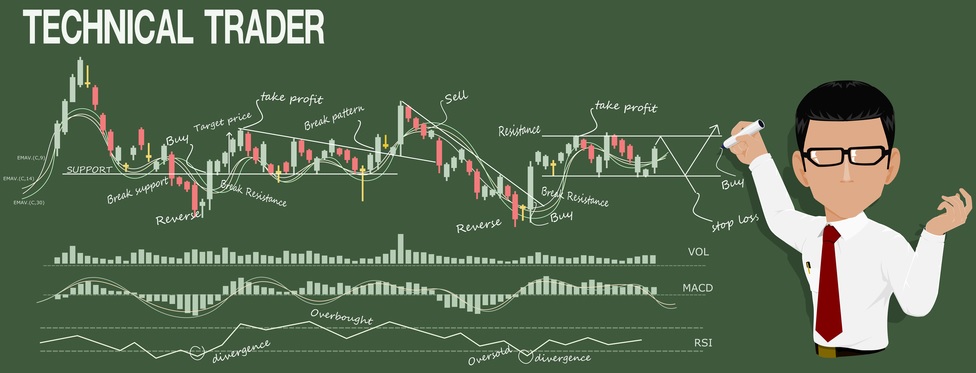
    Technical trading is perhaps the most involved style of trading strategy, and one that is certainly not for the faint of heart. To a greater or lesser extent, most traders incorporate some elements of technical trading into their strategy. But for those who would choose the path of a technical trader, complex data analysis and statistical processing is in place to provide an overwhelming mash of at times contradictory indicators. Be that as it may, technical trading operates on the principle that the evidence never lies, and in drawing conclusions backed by figures and analysis of the data and price charts, many traders find their natural rhythm and trading consistency.

    Technical trading is all about analysing graphs and price charts to identify certain patterns and spot anomalies which could give rise to a profit. The modern day trading arena – whether its CFDs, share dealing or whatever – is a sphere dominated by analysis, data and tools to help brokers make more informed decisions, and this is only on the increase as brokers continue to jostle for some form of differentiation from the crowd.

    The theory goes that by getting to grips with past performance and price patterns, it becomes more possible to get a feel for the market’s tolerance to certain price points, making it that much clearer when a share becomes over- or under-priced, thereby leaving opportunities for significant profit.

    Technical Trading Strategy Benefits

    The key advantage to technical trading is that very little is left to hunch. When you’re sitting with price data over a period of the last few months, and you’ve established clear price limits and boundaries, it can after time become obvious when a share is on the move, and the indicators should ideally clearly point to a particular investment decision. The more analysis you conduct, the more comfortable you are with a share or market background, enabling you to be in a better position to better determine how to react to certain movements.

    Of course, this has to be tempered by the complexity and the level of involvements technical trading requires. The process of analysing graphs and interpreting data is one best suited to those with a passion for numbers and arithmetic, and while most traders will to some extent enjoy mathematics and statistics, there can come a point with technical trading where it becomes a bit too much.

    If you intend on building in technical analysis into your trading strategy to any great extent, it’s probably more advisable at first to do so on a staggered basis, taking cues from external factors like corporate announcements in addition to a cold, hard interpretation of the numbers – ideally to help break you in to your new trading strategy, if not from the point of saving your sanity.

    Technical trading has a number of merits to it, and there is much to be said for the trader who is dedicated to sifting through charts and graphs throughout the trading day. It’s not an easy path to tread, but building a level of competent comprehension when it comes to trading statistics can help identify a wealth of subtle trading opportunities that other strategies may fail to pick up on.

    Top 5 Technical Indicators Video

  • Hedging Strategy – How To Hedge

    Hedging Strategy – How To Hedge

    Hedging is the process by which investors seek to position themselves as safely as possible, offsetting long positions with corresponding short positions in order to attempt to guarantee a profit – whether markets move up or down. The flexibility afforded by trading CFDs makes it possible to take positions on both sides of the fence, and allows you to capitalise on wider market movements that impact on your positions while taking steps to ensure you profit whatever happens.

    Hedge funds, as is apparent from their names, aim to hedge their positions to guaranteed earnings for their clients, and will the strategies used are far from foolproof, the hedging mindset is one that has a significant role to play in minimising risk and creating a steady, profitable portfolio.

    How’s Hedging Different?

    Hedging differs slightly from pairs trading in so far as it tends not to be restricted to single pairings. Hedging is more of a portfolio consideration, and tends to look at sectors and industries which conversely relate to one another, and can even cross trading instruments and asset classes. The point of hedging is to minimise risk, and ideally generate a profit in the process. Much of the magic in hedging lies in understanding how markets and industries interrelate, and how prices are likely to react to indicators affecting their sectors.

    For example, it might be the case that the government is proposing to invest more heavily in green energy. A position in support of green energy producers might be offset by a short position on mining companies with a heavy exposure to coal, given that we might expect the latter to perform less well over time as a consequence of the government announcement.

    The hedge here is that green energy companies will do well off the back of the announcement, and the steps taken to short coal mining companies neutralises the risk of volatility in the green energy market. This gives the trader a better chance of realising a smaller profit – something which is essential when managing other people’s money, and particularly welcome in an otherwise volatile trading environment. When executed well, hedging strategies can offset the bulk of the risk of any position, and can go a long way towards ensuring stability across a portfolio.

    Hedging Strategy Benefits

    While minimising risk is a crucial part of hedging, it also reduces the profit potential for those trading with a hedging strategy in the short term, favouring instead a more stable, steady approach. This means potentially sacrificing wildly successful positions to the extent that your offsetting hedge trade fails, but nevertheless maintains a manageable risk profile and ensures your don’t fall too far behind on any one sour position.

    Hedging as a strategy is more than just an idea, and there have been many books and journals dedicated to identifying and exacting workable hedges. When trading CFDs, the margined nature of the product increases even further the need for cautious, prudent hedging, and for the conservative trader with a desire to preserve capital and avoid losses, factoring in a degree of hedging can be an ideal way of building your trading capital and gaining experience in one of the most fundamental areas of sustainable trading.

    Video Explaining Hedging in More Detail

  • Pairs Trading Strategy – How To Trade Pairs

    Pairs Trading Strategy – How To Trade Pairs

    Perhaps one of the most common strategy adopted by regular CFD traders, pairs trading (may be called arbitrage trading) is a good way to both double up on the gains of specific market movements while also acting as a counterbalance, or hedge, against markets moving in unexpected ways. Relying on a traders ability to find correlative positions and identify corresponding trends across different instruments and markets, pairs trading strategies form at some level part of the strategies of more experienced traders, and are a simple way to breed some measured consistency into your trading portfolio.

    A pairs trading strategy usually involves adopting two related positions – one going long, the other going short – in an attempt to create a direct trade-for-trade hedge. More often than not, this would be done within the same industry, picking a likely strong performer and a likely weak performer to interrelate.

    Pairs Trading Benefits

    The idea with pairs trading is that you’re effectively giving yourself a second chance of making a profit, and an opportunity to capitalise on downwards market movements. In order to make a pairs trade profitable, the earnings from one position need only outstrip the losses of the corresponding position, and in some instances both may do well. By taking a second, notionally linked position, you’re effectively giving yourself a better chance of striking gold with one – even if the market moves counter to your rationale.

    For example, you may believe one airline is destined to do better than another, so go long on Airline 1 and short Airline 2. In doing so, you’ve effectively hedged your position – all you need is for Airline 1 to improve in value more than Airline 2 falls (or vice versa) to create a profitable trade, and the degree to which prices move in your favour is of course exaggerated by the margined nature of CFD trading.

    Pair Trading Strategy Difficulties

    Unfortunately, the real skill in pairs trading lies in spotting trends amongst assets and trading bases, and often this comes down to overdue market corrections or temporary blips in pricing. Effectively, this means that as a pairs trader you are constantly resigned to scouring through data for solid pairings to arbitrage, and it can take some time to become familiar enough with market analysis techniques to identify these occurrences. That said, it can often be possible to identify situations where pairs will produce a virtually guaranteed profit, and with the backing of leverage this can be particularly lucrative.

    A carefully measured and reasoned pairs trading strategy can be a highly effective way to mitigate against losses whilst ensuring you have the opportunity for maximum profits on the upside. By identifying and trading on correlations, including inverse relationships, pairs trading makes it possible to amplify your sure-fire gains and guard against unexpected and sudden market jolts, providing you with a means of reducing your risk while going some way to stack the odds more in your favour.

    Ultimately, if its good enough for the professionals, it’s good enough for the majority of private traders, and with the relative ease of execution of pairs trading with CFDs, the strategy provides a solid blueprint for building a profitable trading account.

    Essence of Pairs Trading Strategy Video

  • Momentum Trading – A Coherent Trading Strategy

    Momentum Trading – A Coherent Trading Strategy

    When it comes to settling on a coherent trading strategy, none comes close in terms of apparent ease of execution like momentum trading. Momentum trading is where the trader looks to identify trends in price movements and waits to see those movements taking effect before opening complimentary positions to ‘ride the wave’, often relying on macroeconomic indicators and industry developed to predict when markets are likely to start moving. When trading CFDs, the benefits of momentum trading on margin can be significant, leading to vast profits as your positions move with the momentum of the markets.

    Of course, while momentum trading might seem straightforward, easy to understand and low-risk, that’s never a guarantee, and there may well be problems facing the trader who approaches with such a mindset. Choosing the right positions takes time, and is usually a cross between understanding and interpreting the impact of corporate and economic announcements while analysing charts and previous price data.

    Perfect Your Momentum Trading

    As a trader employing a momentum trading strategy, it can be possible to take full advantage of heavy price movements through the relatively transparent shifting in price of certain assets. At the opening of the trading day, you will usually be able to get a feel for the sectors and companies that are performing well, and it just takes one positive corporate announcement to buoy that particular stock and the industry as a whole. By browsing the online forums, blogs and chat rooms, it quickly becomes apparent the stocks that everyone’s talking about – keep an eye on them, because chances are they’ll start to rise at some point over the coming trading day.

    A good momentum trading strategy seeks to find the intersect between economic interpretation and effective analysis of trading data, identifying shares which appear to be preparing to break through their previous upper limits to reach new heights. You are looking primarily to identify stocks that have been performing well and are poised to break through, either positively or negatively, and you should create a shortlist of ‘watch’ stocks for the first part of your trading day.

    Alongside that, you should aim to keep a constant eye on the financial media as the day wears on, and you should already be anticipating announcements that could have an effect on the price of the securities on your watch list. When the conditions are right and prices seem to be moving in one definite direction, it’s time to open your contract and wait for the position to unfold.

    A Word Of Caution With Trading on Momentum

    When trading on momentum, it’s always a good idea to set stop losses, to limit your liability and close out on bad calls before they take a stranglehold of over your trading account. Set stops somewhere between the previous high and low limits for capital preservation if you’re going long, and do likewise with a stop limit if you’re shorting – this is usually a good point to cut things off, and might just be the point of no return for a once promising security on that trading day.

    Of course, momentum trading isn’t a strategy you can perfect in a matter of moments or even days – it takes time to practice and refine your approach, and even experienced traders are still learning lessons. But by giving yourself a strategic area in which to do further reading to start to build up your trading experience, it can be possible to relatively quickly start banking winning, profitable and above all consistent trades.

    Video on How to Read Momentum

  • Scalping Strategy – How To Scalp The Financial Markets

    Scalping Strategy – How To Scalp The Financial Markets

    When it comes to settling on a particular trading strategy, one of the most common that springs to mind is scalping. Scalping is the process of snatching quick profits from trades, often closing out early and moving on after a short period of time whenever the potential for a small profit presents itself. Applied to contracts for difference, scalping strategies can be particularly effective in delivering a steady stream of profits, but also difficult to execute with a few key barriers to easy profits.

    Example of Scalping

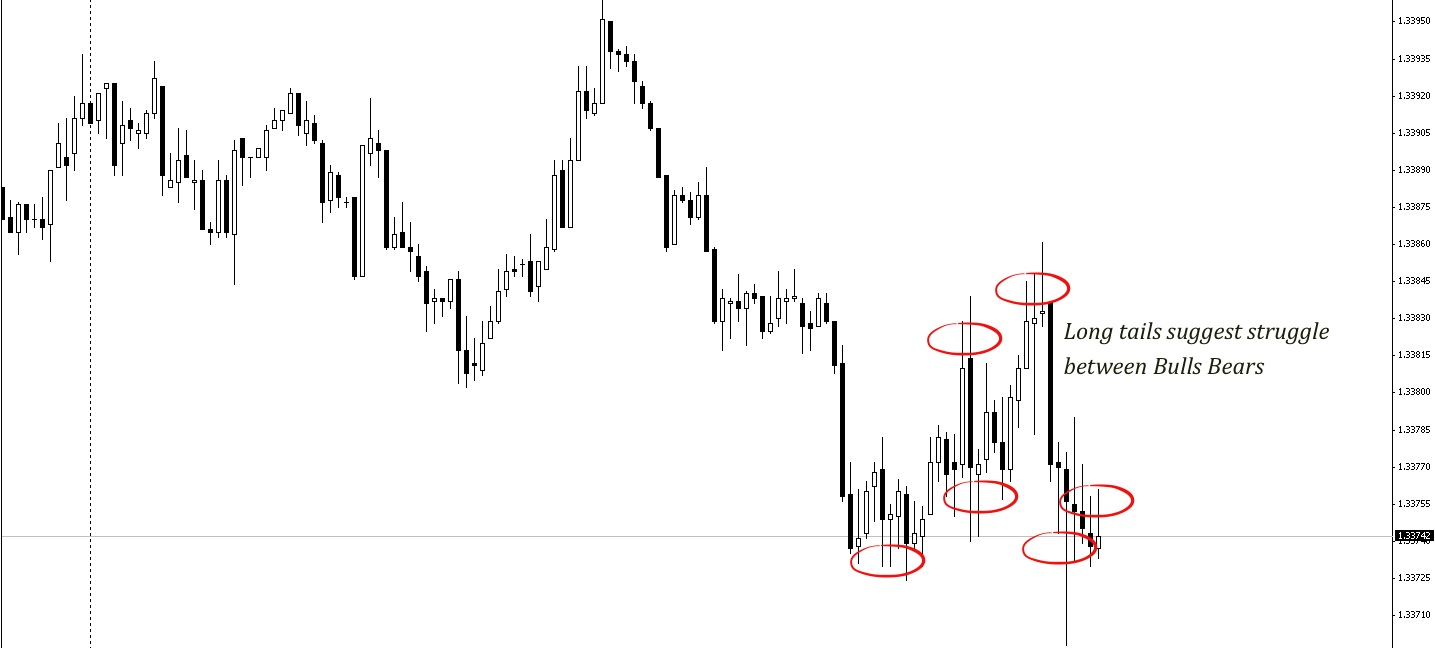
    scalping the markets example


    • Long tails suggest struggle between the bulls and the bears and thus market moves sideways presenting a great opportunities for scalping. Find short term support and resistance and trade of those levels as seen on the image above.
    • Don’t ever try to scalp around important announcements which can cause big swings in either direction; it is better to wait for the quiet times when markets move sideways.
    • Scalping and a very short term strategy, make sure you don’t use this strategy for a long term trading and make you apply “stop loss” order to keep potential losses in check.

    Here’s a run down of the advantages and disadvantages of scalping strategy.

    Scalping Benefits

    • Leverage: the primary advantage of scalping with CFDs is the role of leverage, which acts as a buffer to bring larger profits from each trade. Because the scalp takes place over a very short period of time (often a mere matter of hours or even minutes), the margined nature of CFDs allows you to maximise earnings over the short space of time, with margin requirements of as little as 5% making generous gearing ratios possible.
    • Low Financing Costs: when dealing with leverage and margin, the costs of borrowing can often stack up, particularly when positions are held overnight or for a matter of days. With a scalping strategy, you get the benefits of a leveraged position without the drawbacks of expensive financing costs, which can often eat considerably into the profit portion, simply by holding on to your leveraged portion for less time.
    • Minimal Risk Exposure: the chances of losing too much over the course of a few scalping trades are minimal, and markets seldom move so violently as to cause any serious damage over such short periods of time. Likewise, by locking in profits when they arise, there’s very little chance of being in a position long enough for markets to correct and start to act against you.

    Scalping Risks

    • Limited profit potential: while scalping demands that you quickly lock in profits and close out transactions, this is often at the expense of more generous returns that come with time, and by limiting your positions arbitrarily you may be curbing your potential for taking a profit, which can be particularly hard to stomach when it later becomes apparent you’d backed a winner.
    • Time-intensive: as trading strategies go, scalping is one of the most time consuming, relying on constant market engagement to make sure you’re taking profits when they show and cutting out at the right times. While broker orders can foot much of this responsibility, it’s still essential that you remain consistently on the lookout for your next scalp whilst also managing your current open positions.
    • High transaction costs: because you are out to bank small profits wherever possible, the costs of transactions begin to look more significant, and automatically start you off on the wrong footing with each and every trade. Particularly given the higher transaction costs on leveraged positions, this can make scalping individual profits sufficient to exceed the applicable costs a tricky task.

    Scalping Trading Video to Demonstrate the Strategy in Action

  • Swing Trading Strategy – How To Swing Trade

    Swing Trading Strategy – How To Swing Trade

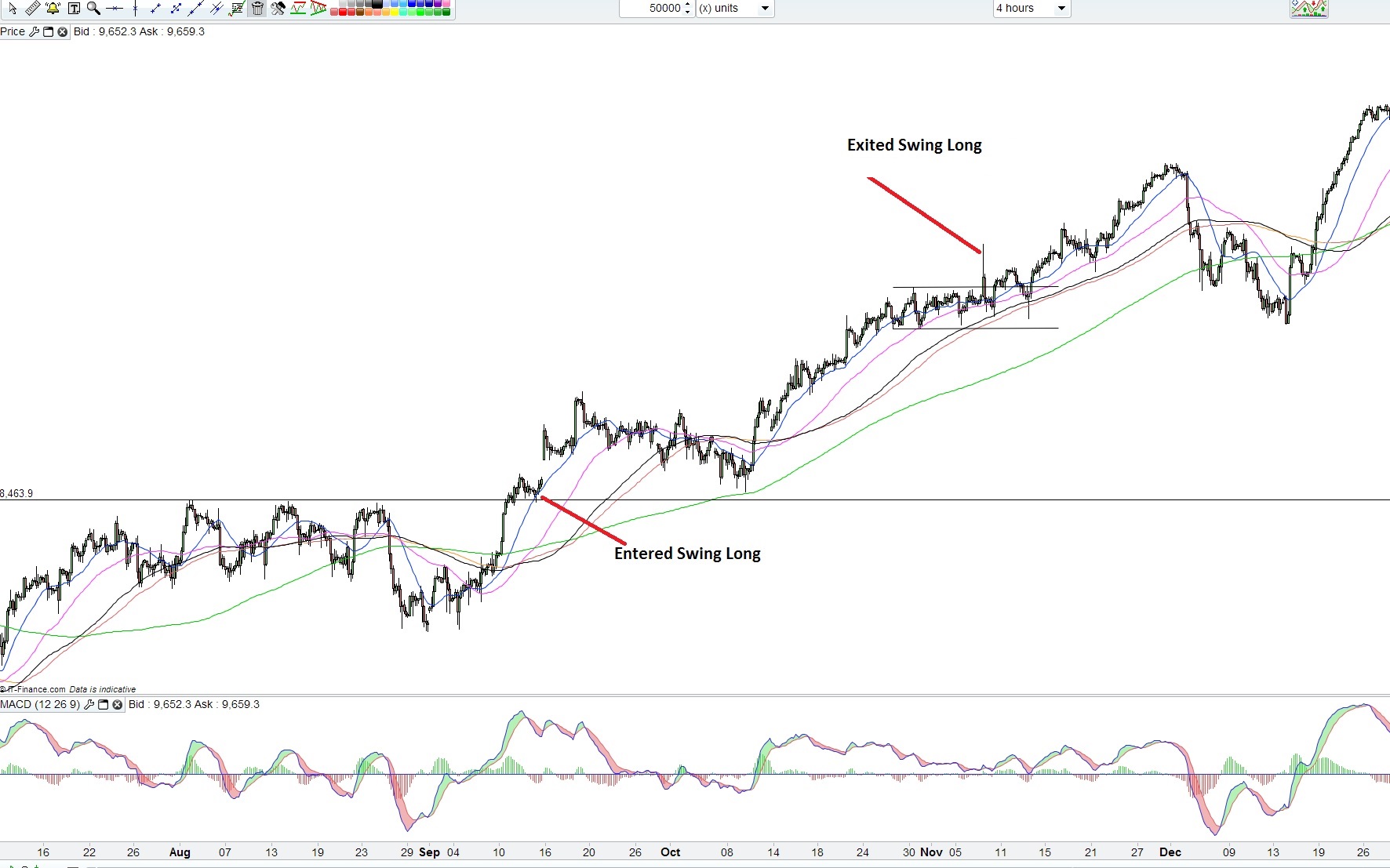
    One of the comparatively longer-term trading strategies often adopted by investors is known as swing trading. Swing trading is the process of investing at the top and bottom of previous price movements, striving to profit on the anticipated correction to come, and can take place over days, weeks and even months in so far as is permitted by financing costs. By virtue, swing trading has the potential to generate significant prices on the recovery of a CFD, but is naturally fraught with danger, and high in risk without the right stops in place to limit liability.

    Example of a Swing Trade

    swing tradng exampleSwing Trading Benefits

    Swing traders generally look to identify instruments and assets that are trading below or above the range at which they legitimately should, taking positions on the correction to capitalise on the return to a price range the market can stomach. This is usually done by interpreting graphs and identifying break-out points with particular stocks that appear to be trading over (or under) the point of their inherent value – thus, swing traders pick up on price anomalies, leverage their position with CFDs and look to ideally profit on the difference.

    Swing trading can also benefit from wider market trends, and is often best executed when working with the momentum of a market already in flux. When a correction is due and the markets are working in your favour, it can be significantly easier to capitalise on your positions and maximise your profits than where the markets are working against you. Although the possibilities for profiting are clear in both environments, working with the market does tend to deliver more generous returns, and can even cause swings beyond the point of correction to load up on your earnings.

    Swing Trading Risks

    The main risk associated with swing trading is that you buy on the strength of a false positive indicator, only for underlying prices to continue to fall. Naturally, this can be a devastating position to take, particularly when trading highly leveraged CFDs, and you really can’t afford to absorb too many losses of this kind.

    For this reason, it’s important to make sure you’re only investing on the strength of a credible, real price rise, which may mean sacrificing a small amount of profit as you hold off to ensure prices are moving as you expect. Don’t get greedy here – take your time over entering positions to guard against the possibility of a total collapse of asset price, and ensure you have stop losses in place at all times to guard against every eventuality.

    Swing trading is but one of many trading strategies that can be applied to CFDs trading, and it’s very much up to you as a trader to find a strategy that suits your trading style and ability. Swing trading is definitely not the easiest strategy to execute, and nor is the lowest risk. But what swing trading does have in its favour is the ability to realise larger profits for those positions that do hit the nail on the head, and provided you take steps to mitigate the risk of a share price collapse, swing trading can prove a valuable strategy to have in your arsenal.

    Swing Trading Video Explaining Entrance and Exit Points